

 English
 عربى
عربى Español
High-Strength Clear Acrylic Sheet
One of Oleg's popular products is the clear acrylic sheet, and our strong production capacity ensure...



Content
A 1220 x 2440 mm sheet of 3 mm cast acrylic weighs about 10.3 kg. Cut the same sheet from 10 mm stock and it weighs 34.3 kg, yet it is roughly 37 times harder to bend. Most 3mm vs 5mm vs 10mm acrylic sheet decisions come apart at exactly this point: buyers compare price per sheet, while the finished panel is judged on stiffness, free span and hanging weight.
This guide is written for the people who sign off on material: display fabricators, signage contractors, interior fit-out teams and OEM buyers sourcing cast polymethyl methacrylate (PMMA) sheet in volume. Each thickness gets the same treatment here - what it does well, where it fails, and the figures that decide the specification.
Choose 3 mm for fully supported panels with free spans under 400 mm, 5 mm for spans of 400 to 700 mm under light loads, and 10 mm as soon as a panel carries real load, spans more than 700 mm, or needs a machined and polished edge.
Four variables decide the answer, and thickness is only the last of them:
Shortcut worth remembering: doubling the free span increases deflection roughly sixteen times, so restoring the original deflection needs about 2.5 times the thickness. Controlling span is almost always cheaper than upgrading thickness.
The fastest way to narrow the choice is to match the application to a column, then check the weight and the cutting method before committing to a purchase order.
| Property | 3 mm | 5 mm | 10 mm |
| Weight per square metre | 3.6 kg | 6.0 kg | 11.9 kg |
| Relative stiffness, indexed to thickness cubed | 1.0 | 4.6 | 37 |
| Practical free span under light load | Up to 400 mm | 400 to 700 mm | 700 to 1500 mm |
| Weight of one 1220 x 2440 mm sheet | 10.3 kg | 17.1 kg | 34.3 kg |
| Cutting method | Score and snap, laser | Panel saw, CNC, laser | CNC router, panel saw |
| Typical applications | Sign overlays, diffuser covers, display cases | Retail displays, partitions, furniture inserts | Table tops, CNC letters, guards, balustrade infill |
| Relative material cost per square metre | 1x | About 1.7x | About 3.3x |
Material cost per square metre rises roughly in step with thickness. Stiffness does not. That gap is the entire argument for specifying thickness deliberately instead of defaulting to the cheapest sheet that fits the order.
Bending stiffness of a flat sheet scales with the cube of its thickness, so the move from 3 mm to 10 mm multiplies stiffness by about 37 while weight only triples.
Every cast PMMA sheet of a comparable grade shares the same flexural modulus, in the region of 3,100 to 3,300 MPa. Thickness is therefore the one property a specifier can change that enters the stiffness equation three times over, because stiffness per unit width is proportional to the modulus multiplied by the cube of thickness.
The same arithmetic governs deflection. Under an identical mid-span point load, a 3 mm panel bends roughly 37 times as far as a 10 mm panel of the same width and span, which is why one thickness step solves most sagging problems that extra framing cannot.
A 10 mm sheet is not three times stiffer than a 3 mm sheet. It is about 37 times stiffer, and only 3.3 times heavier.
3 mm cast acrylic is the right choice for flat, fully supported panels and short spans: sign overlays, light diffuser covers, display-case glazing, picture framing and prototype work.
A full 1220 x 2440 mm sheet weighs only 10.3 kg, so one person can handle and position it, and a standard clear cast grade transmits around 92 percent of visible light. The material cuts cleanly by scoring and snapping, and laser cutting leaves a near-polished edge without secondary work.
It fails in three predictable ways: free spans beyond roughly 400 mm bow under their own weight, outdoor sign faces wider than about 300 mm deflect in wind, and fixing holes drilled tight will crack as the sheet moves, because cast acrylic expands and contracts about 0.07 mm per metre for every degree Celsius.
A 3 mm panel spanning 900 mm will visibly bow; the same sheet fixed to a 300 mm frame stays flat for years. In that sentence, the frame is doing more work than the thickness is.
5 mm is the working default for retail displays, partitions and furniture inserts because it covers the 400 to 700 mm span range while a full sheet still weighs only about 17 kg.
Stiffness is roughly 4.6 times that of 3 mm, which is enough to keep a shelf or a display back panel flat without a heavy frame. Sheet is normally processed on a panel saw, CNC router or laser, and the visible edge holds a clean line on exposed components. Solvent-cemented joints are more forgiving than at 3 mm because the bond area is larger, although 10 mm remains the better choice for joints that carry load.
At this thickness, finish selection matters as much as the gauge. Single-sided frosted sheet works as a light diffuser when the etched face is turned towards the light source, while double-sided frosted sheet is used for privacy screens and back-painted panels. Color and finish are usually chosen together, and the color catalog shows the tones available across the range.
10 mm cast acrylic is the entry point for panels that carry load, resist wind, or get machined into parts with polished edges that will be seen up close.
Typical work includes table tops and reception counters, CNC-cut letters and logos, machine guards, balustrade infill, laboratory screens and heavy retail fixtures. A full sheet weighs 34.3 kg, so two people or a vacuum lifter are needed, and every bracket, adhesive and substrate must be rated for that weight rather than for the 3 mm sheet an early drawing may have shown.
Thickness does not provide weather resistance; the polymer formulation does. Outdoor panels in any gauge need a UV-stabilized cast grade, and 10 mm outdoor work also needs expansion gaps calculated at about 0.07 mm per metre per degree Celsius, or a large panel will stress its fixings in summer heat.
37x the stiffness of a 3 mm panel, at 3.3x the weight. The 3 mm to 10 mm step is the strongest stiffness-to-cost position anywhere on the thickness ladder.
Work through these five steps in order. Each one removes a failure mode that a purely price-based comparison would leave in place.
Borderline projects are the expensive ones. When an application sits between two gauges, the thick vs thin acrylic sheet comparison walks through the cases where a half-step saves money and the cases where it creates a callback.
No. A table top is a load-bearing surface with point loads and a span, so 10 mm is the practical minimum for a small table and 15 mm or more for larger ones. A 5 mm top flexes under a hand and eventually crazes around its fixings.
Yes, if the panel is fully supported, spans stay short and the sheet is a UV-stabilized cast grade rather than general-purpose extruded material. Keep free spans under about 300 mm in exposed locations and drill fixing holes oversize to allow thermal movement.
About 3.3 times. The same panel weighs 3.6 kg per square metre at 3 mm and 11.9 kg per square metre at 10 mm, so a 1220 x 2440 mm sheet goes from roughly 10.3 kg to 34.3 kg.
Only slightly. Clear cast acrylic transmits around 92 percent of visible light at 3 mm, and the drop at 10 mm is typically one to two percentage points because the material has very low internal haze. For backlit work, the diffuser finish matters more than the gauge.
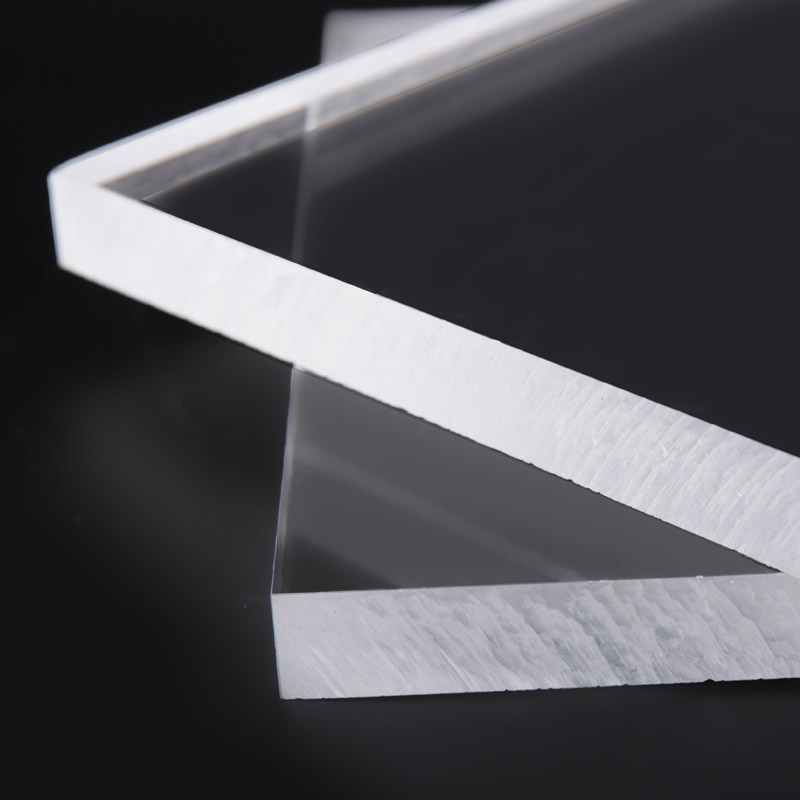
One of Oleg's popular products is the clear acrylic sheet, and our strong production capacity ensure...
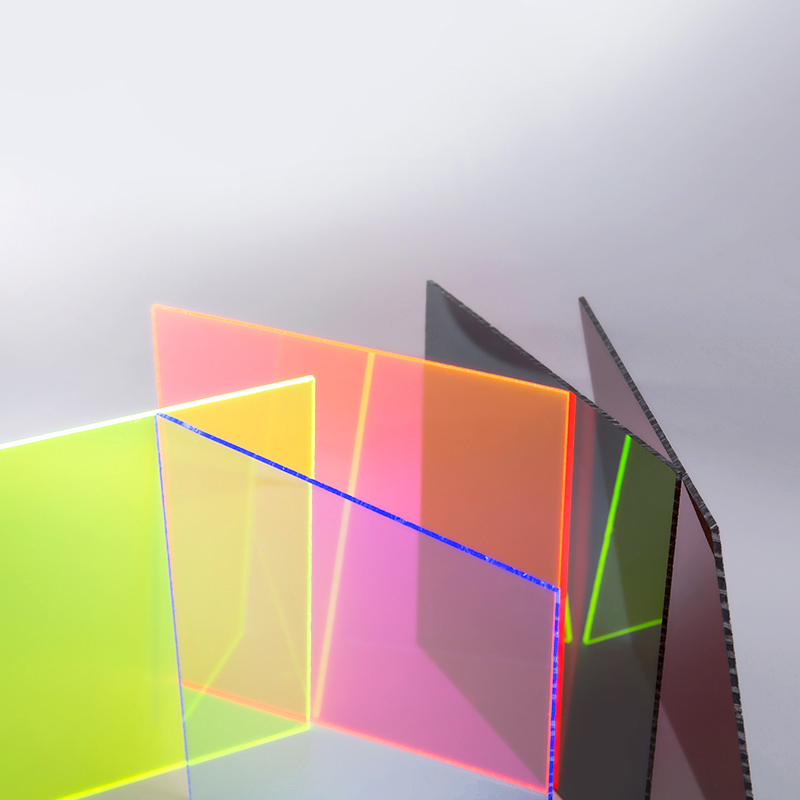
Oleg's products, whose raw material is virgin from Mitsubishi. OLEG is one of the TOP 5 cast acrylic...
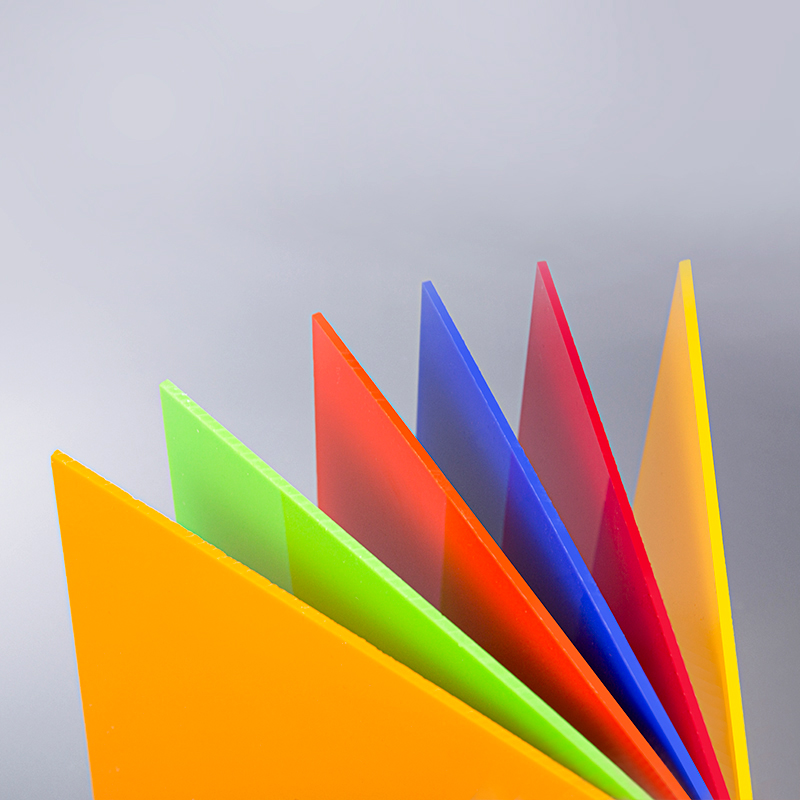
OLEG’s product, whose raw material is virgin from Mitsubishi. The color is highly uniform, pure and...

Golden acrylic sheet has tiny gold glitters in the material, which cause a luxurious effect. • Relia...
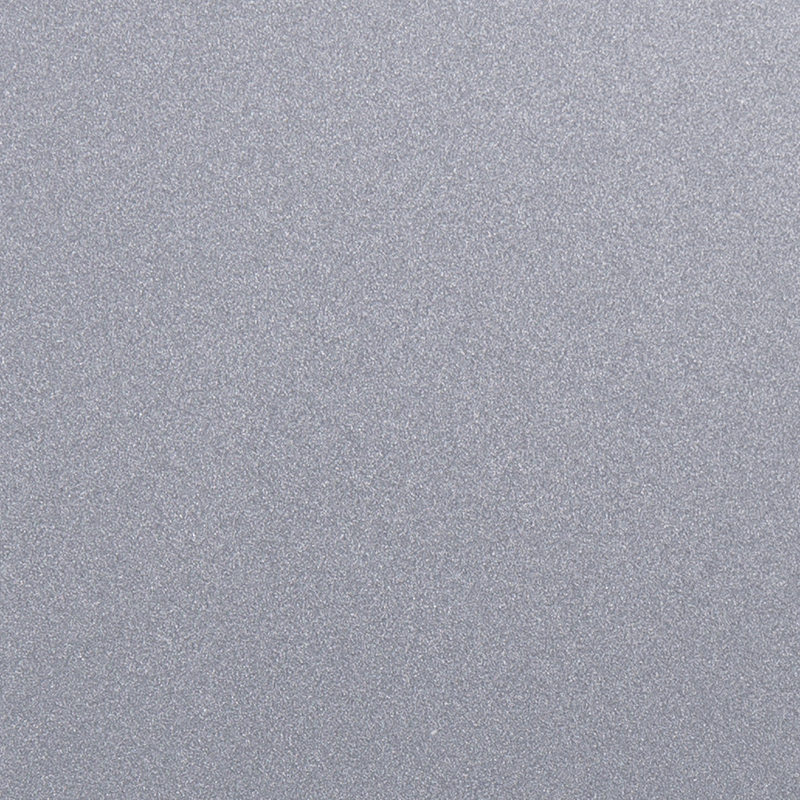
Silver acrylic sheet has tiny silver glitters in the material, which creating an elegant effect. • A...
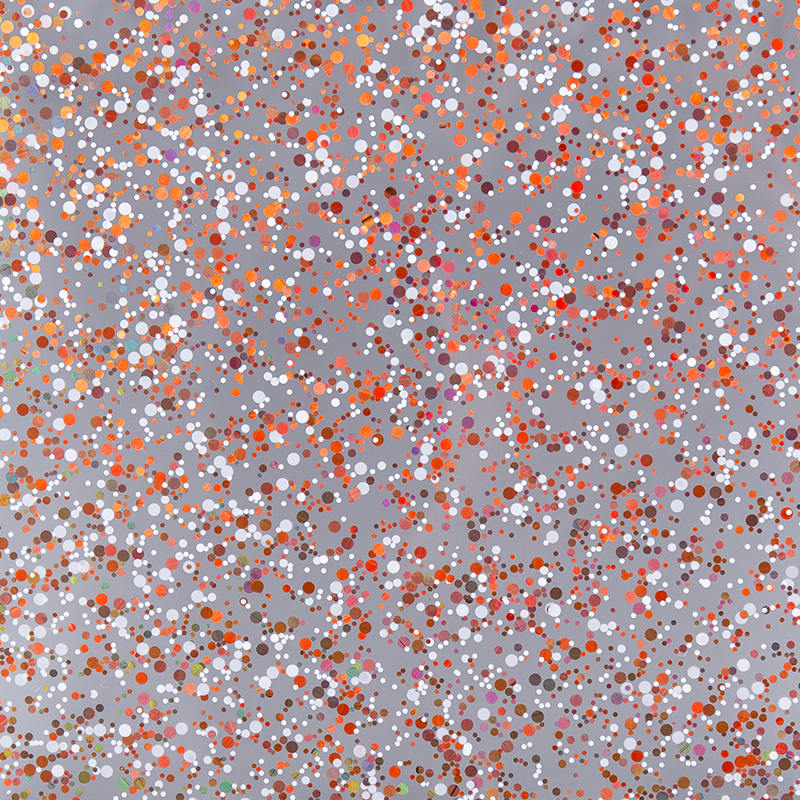
Tiny colored glitters are added to the transparent material to create a colorful and joyful visual e...
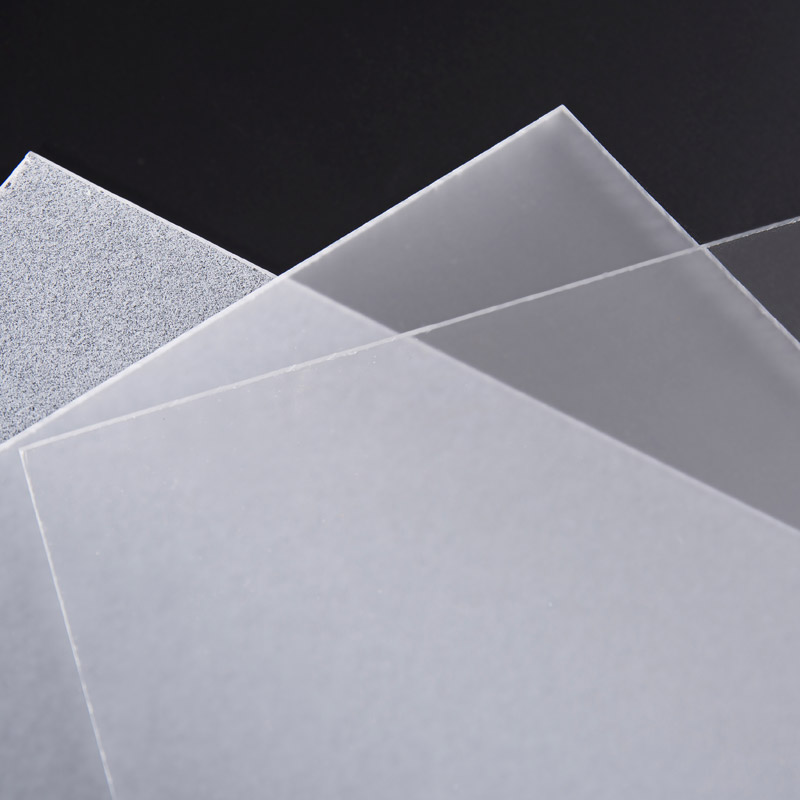
OLEG is a professional manufacturer of cast acrylic sheet, offering high quality products, attractiv...
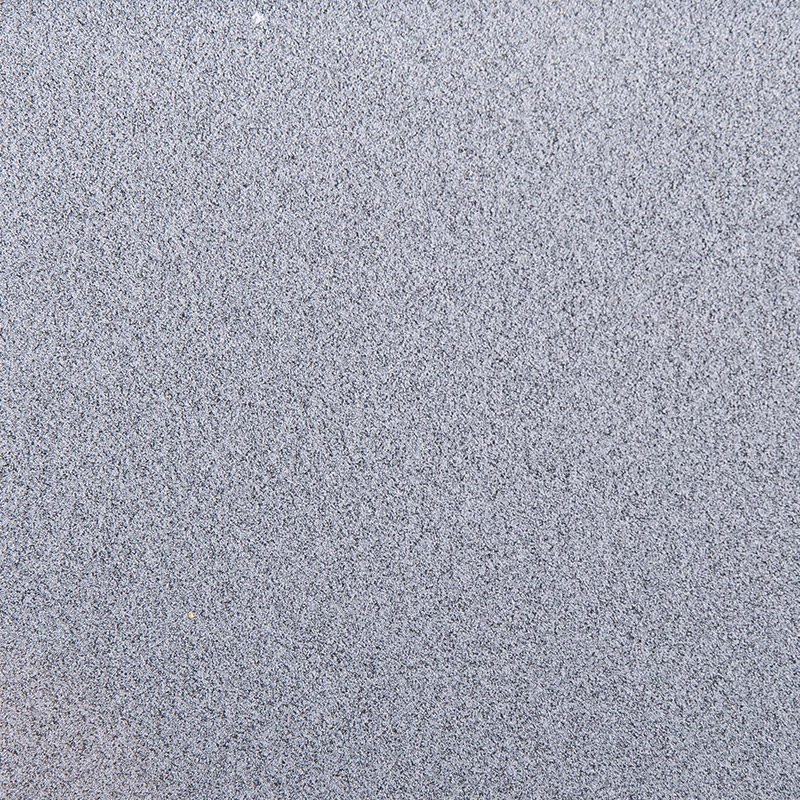
OLEG double side frosted acrylic sheet features a matte finish on both sides. Its modern appearance ...
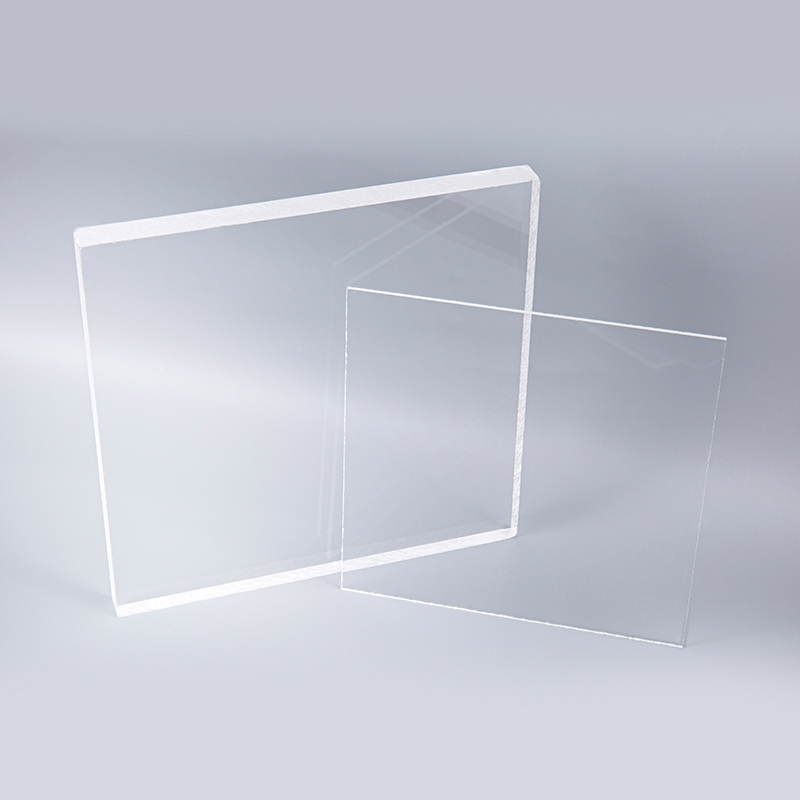
• UV Resistance: Resistant to degradation from UV light, maintains its original color and clarity ov...

